
Log in or Sign up
Payment / AccessRight of RecissionHelp / FAQContactNewsletter
Go to homepage
Manuals
Calibers
Powders
Bullets
Loads
Prices
QuickLoad - Software for experienced Reloader
Essential Reloading Equipment
Reloading Primers
Caliber Ranking
Burn Rate Chart
Subsonic Load Data
Your account
Log in
or sign up
Overview Your profile Addresses Payment methods Orders
US$0.00*
Payment / AccessRight of RecissionHelp / FAQContactNewsletter
Show all categories What is the Effective Combustion Chamber Volume?
Back Show What is the Effective Combustion Chamber Volume?
  • Manuals
  • Calibers
  • Powders
  • Bullets
  • Loads
  • Prices
  1. Help / FAQ
  2. What is the Effective Combustion Chamber Volume?

Help

  • How to unlock restricted load data?
  • How to redeem discount voucher?
  • Create and use wishlist / bookmarks
  • How to rate and comment xxl-reloading?

  • Powder criteria to be listed in load table
  • Why do loads differ from other soures?
  • Can I deviate from the load data?

  • What is "Filling Percentage", "Fill Rate" or "Load Density"?
  • Which saftety standards define the maximum allowed pressure and standard cartridge dimensions?
  • What is V(0) and V(0)*?
  • What is "propellant combustion" or "powder burnt" or "z"?
  • What is the Effective Combustion Chamber Volume?

  • Impact of barrel length on muzzle velocity
Effective_Combustion_Chamber_Volume

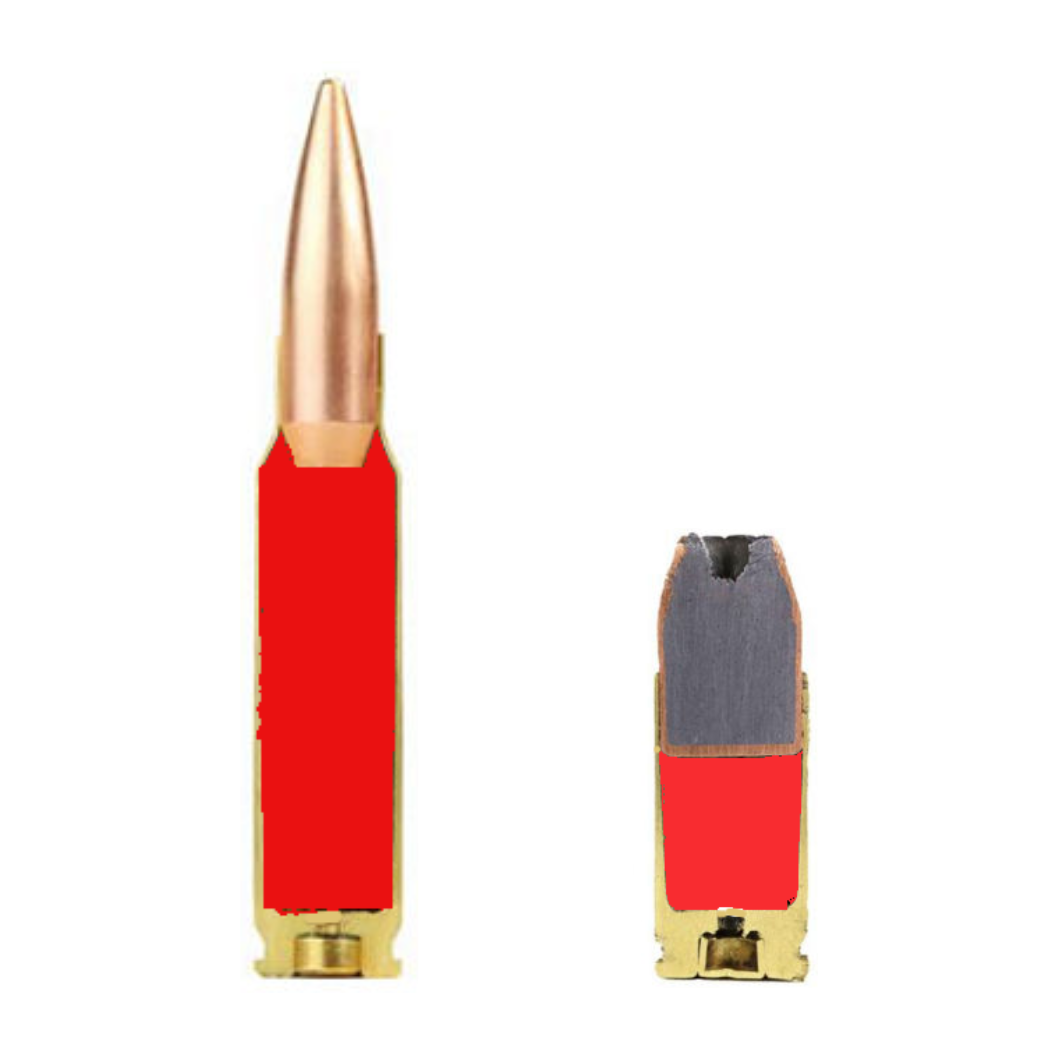
What is the Effective Combustion Chamber Volume?


The Effective Combustion Chamber Volume is calculated by subtracting the volume of the portion of
the bullet extending into the case from the Maximum Case Capacity. The  standard Maximum Case Capacity can be found in our cartridge database and is also provided by the safety standard.

Important notice: The actual case volume can deviate significantly from the standard value. We recommend you measure your cartridges before loading.

This is how you can measure the case volume: After obtaining the weight of a dry empty case (with used primer in place), fill the case with water. Eliminate any air bubbles and bring water even to end of case neck. Reweigh water-filled case. Subtract dry case weight from water-filled case weight. This gives case capacity in grains of water, which is the standard unit of measure and listed in our database.

The volume of the portion of the bullet extending into the case needs to be calculated based on the bullet type, specifically the base type of the bullet. With flat-base bullets, calculation of the area occupied by the bullet requires only bullet diameter and seating depth. With boattail or hollowbase bullets,  base design needs to be considered.

xxl-reloading.com
Newsletter

Subscribe to the free newsletter and do not miss any news or promotions.

Privacy *
About XXL

We are engineers, reloading enthusiasts and operate one of the most powerful ballistics calculators.

Please help us to improve and report any suggestions via our contact form.
Service
  • Payment / Access
  • Right of Recission
  • Help / FAQ
  • Contact
  • Newsletter
Company
  • About us
  • Privacy
  • Terms of service
  • Imprint
Buy Load Data using Credit Card
Buy Load Data using Paypal
©2023 xxl-reloading.com

* All prices incl. VAT plus shipping costs and possible delivery charges, if not stated otherwise.

This website uses cookies to ensure the best experience possible. More information...